


Can We Really Predict Markets Long-Term With AI?
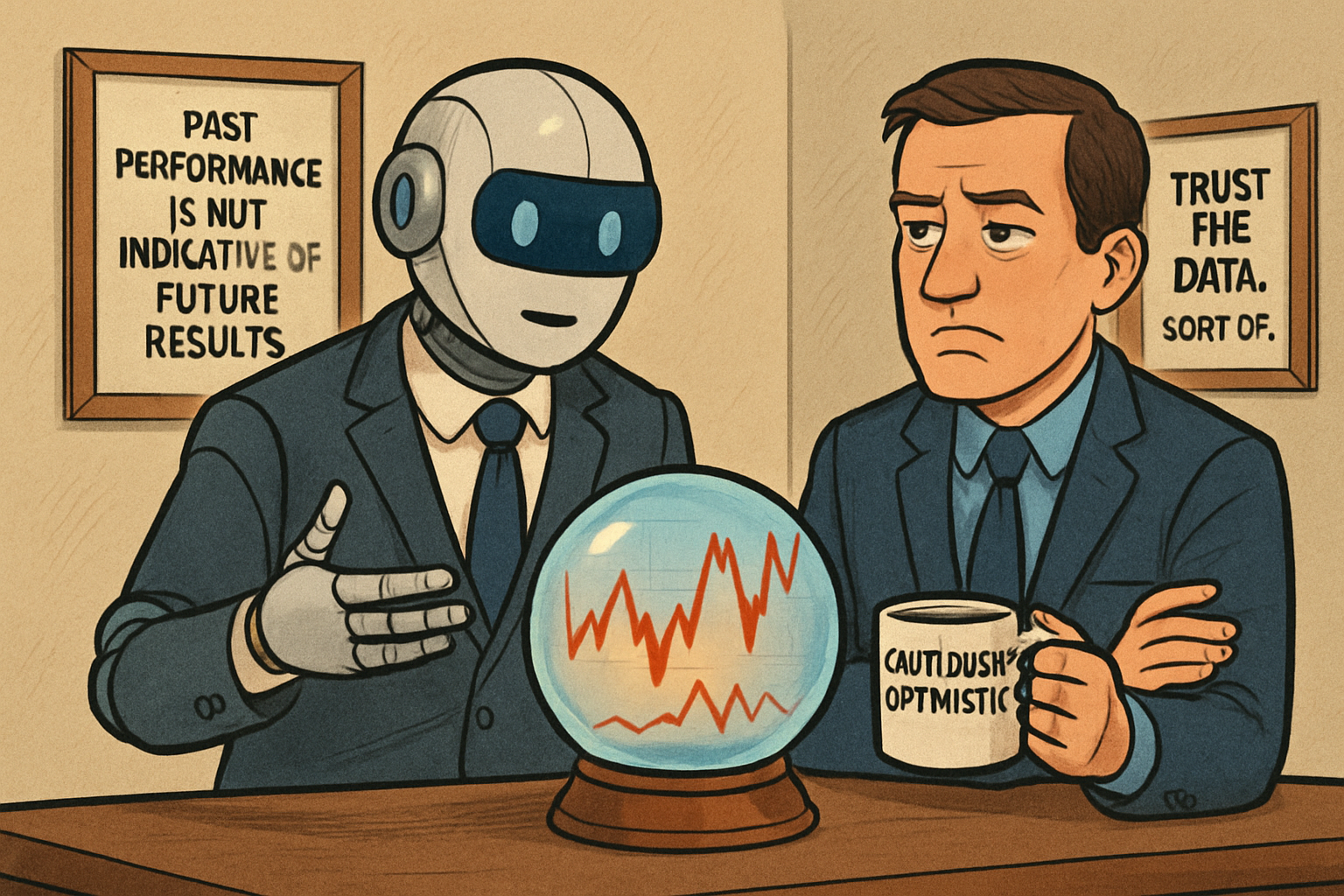
Can We Really Predict Markets Long-Term With AI? A Closer Look
Traders and investors are no strangers to using technology for short-term market predictions. Many rely on technical analysis—like candlestick patterns—to gauge what might happen in the next hour or even across a single trading day. But what about making these predictions over weeks, months, or quarters? Is the technology there, and if so, why aren’t we using it to its full capacity?

Short-Term Predictions: The Current Norm
It’s no secret that traders often find success predicting very short-term movements. If you’ve ever watched how the “previous candle” informs the next move, you already know how effective these rapid, pattern-based predictions can be. This style works because markets, in the short term, are often influenced by immediate reactions, recent trades, and technical levels.
The Challenge of Long-Term Market Predictions
But as the time frame grows, so does the complexity. Why? Because:
- More Variables at Play: Longer time frames mean more chance for unexpected events—political changes, global economic shifts, natural disasters, and regulatory updates can all swing the market.
- Decreased Accuracy: The further out the prediction, the less reliable it becomes. Short-term models rely on recent data; long-term models must grapple with the unknown and often see accuracy drop.
- Demanding Technology: Advanced AI models (think deep learning or complex statistical processes) need huge computing power to process the mountain of data needed for robust long-term forecasts.
Are We Underusing AI for Market Forecasting?
In one sense, yes—the potential is there. AI and machine learning are advancing rapidly, and the promise of much-improved long-term forecasting is real. But we’re not quite there yet. The hurdles are big:
- Data Complexity: More data isn’t always better if it’s noisy or unreliable over the long term.
- Computational Limits: As models become more complex, they need more resources.
- Unpredictable Events: Black swan events can’t be predicted with historical data.
The Future: More Powerful (and Careful) AI
AI will almost certainly play a bigger part in market predictions as technology matures. The dream is a model that can successfully navigate both the noise of short-term trading and the chaos of long-term investing. For now, however, most traders find that while technology is a powerful tool, it still can’t see the whole future—at least, not just yet.
Have thoughts or experiences with AI and trading? Share them in the comments!
Want more insights on trading, investing, and technology? Follow our blog for the latest updates!
Feel free to copy-paste this into your WordPress editor. Let me know if you’d like to add images, tags, or further customize the post!


